Collective behaviour in cockroaches
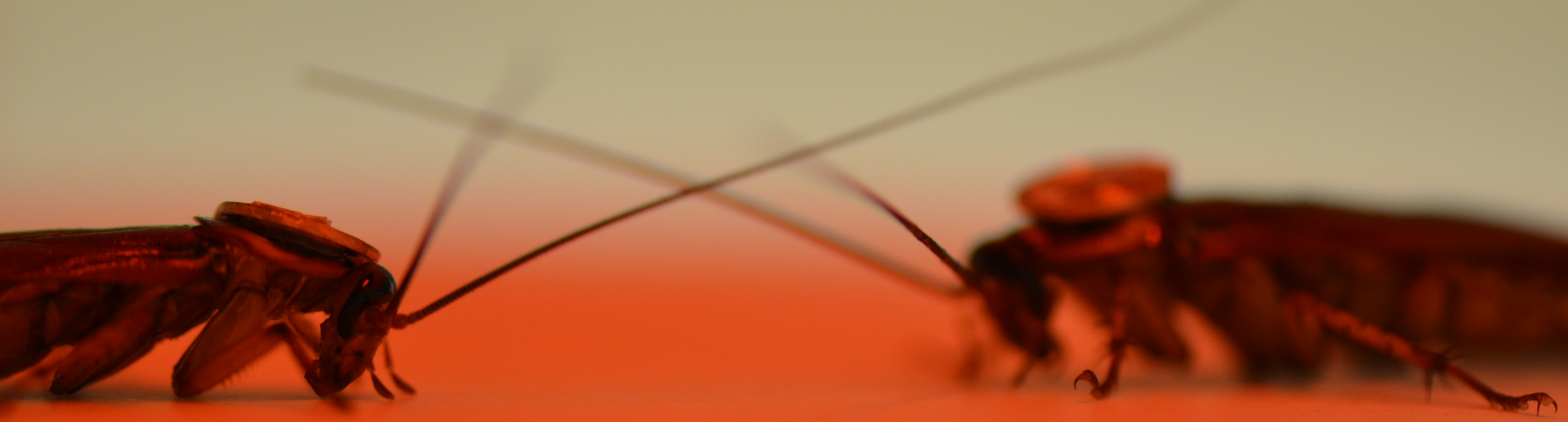
Collective behaviour has fascinated mankind since the beginning of the modern age. It is not surprising to observe children admiring long trails of ants, or find ourselves wondering how shoals of fish or flocks of birds coordinate their movements in perfect synchrony. The mechanisms, rules and interactions behind these phenomena is at the heart of the collective behaviour research. In my case, I am interested in collective decisions and what happens when individuals differ from one another on their preference or tendency to take risks. When these differences between individuals are consistent over time and contexts we can refer to them as animal personality variation, polyethism, behavioural syndromes or behavioural diversity. My research aims to investigate the proximate and ultimate mechanisms underlying animal personality variation, and determine its relative contribution to the success of collective tasks under different social and environmental contexts. For this purpose, I use cockroaches as model organisms [here is where people say ‘WHAT?!’ and I reply ‘yes, cockroaches’]. These insects display a broad range of societies—from highly hierarchical to barely gregarious—and are closely related to termites (we could say that termites are in fact eusocial cockroaches).
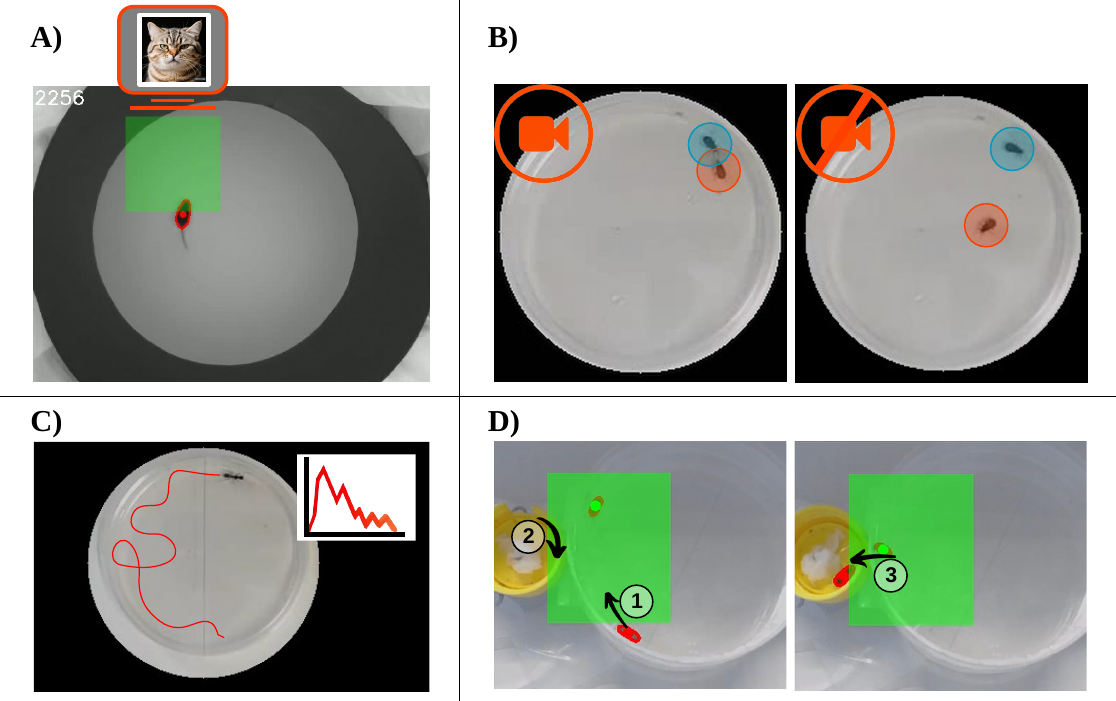
To facilitate the study of animal behaviour, I started developping tools to automate image analysis and response delivery in collaboration with an international team of researchers. If you are interested, check out our TracktorLive project, click here for more information. This real-time tracker has a bunch of cool applications that can be useful to facilitate behavioral and ecological research. It allows to analyse data on real-time—YDELO (you don’t even look once)—and display plots or count interactions, record only when individuals are in proximity, or trigger a mechanical stimulus via Arduino depending on individual position, speed or direction; such as releasing a decoy predator or opening a feeder.